Short answer: most need no treatment, and the useful question is which kind you have
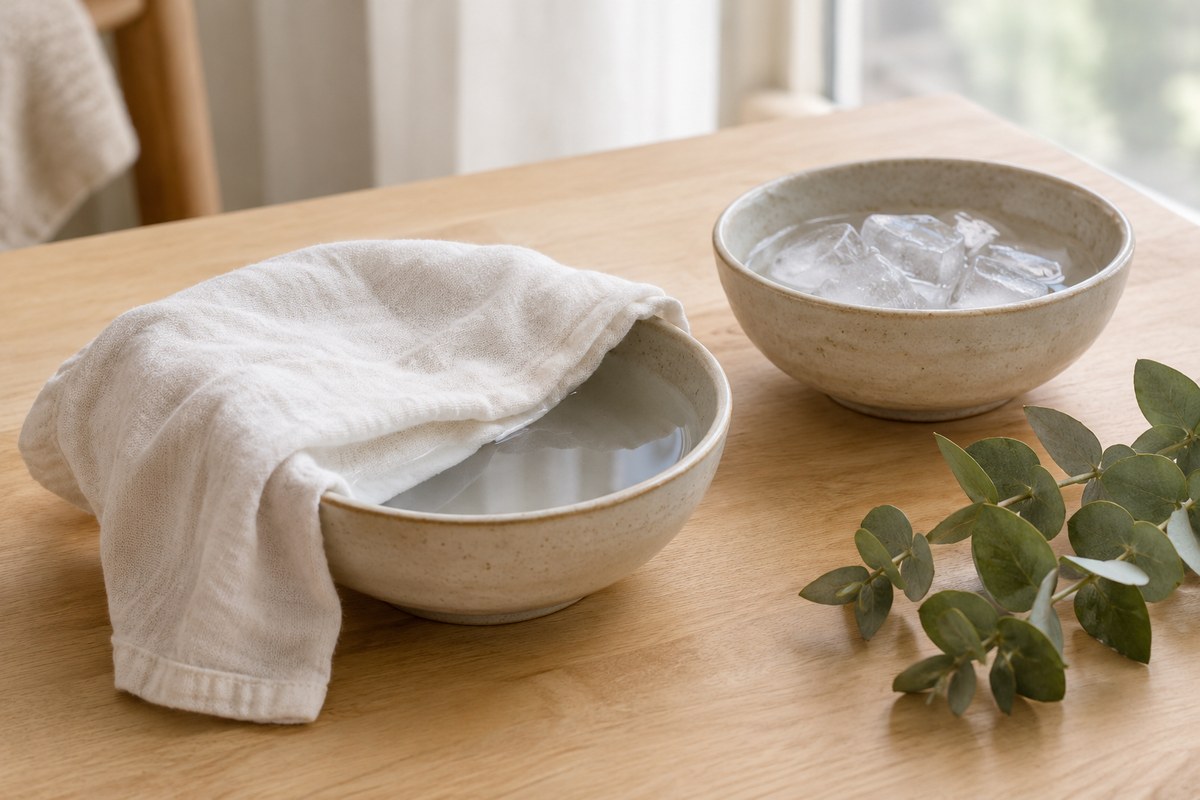
A typical tirzepatide injection site reaction is local, mild and self-limiting, and the standard measures are supportive rather than curative. A cool compress, loose clothing and leaving it alone are what the usual advice comes down to, and none of them shortens a reaction so much as makes it comfortable while it settles. The decision that actually matters is not which remedy to reach for. It is sorting a local reaction, which you manage at home, from an infection or a hypersensitivity reaction, which you do not. One more thing worth knowing before you worry: the label found no clinically significant effect of anti-tirzepatide antibodies on the pharmacokinetics or effectiveness of the drug, so a reacting site is not a sign the medicine has stopped working.
Search this and you get lists of six or seven things to try. What the lists rarely do is say what each measure is for, what is behind it, and when it stops being the right move. That is what this page is.
What the measures do, and what supports them
Nothing below is a treatment in the sense of shortening the reaction. Local reactions resolve on their own. These manage symptoms while that happens.
| Measure | What it targets | What stands behind it |
|---|---|---|
| Cool compress | Itching, stinging, local swelling | General dermatological practice for localised inflammation. No trial specific to tirzepatide. Comfort measure, not a cure. |
| Leaving it alone | Everything. Scratching and rubbing prolong and can break the skin. | The strongest item on the list, and the one most often skipped. |
| Loose clothing over the site | Friction, especially at a waistband | Mechanical. Also a reason to avoid injecting on the belt line in the first place. |
| Letting the pen reach room temperature | The sting of a cold injection | Addresses injection discomfort rather than the reaction itself. Storage rules still apply and are on your label. |
| Over the counter antihistamine or topical anti-itch | Itch | Reasonable for symptom relief, but ask your pharmacist or prescriber first. Nothing here is a recommendation of a specific product or dose. |
| Rotating properly from now on | The next reaction, not this one | The only measure aimed at prevention, and the only one every tirzepatide label instructs. |
The distinction that decides everything: reaction, infection, or hypersensitivity
These look similar for the first day and diverge afterwards. The timeline is what separates them.
| Local reaction | Possible infection | Hypersensitivity | |
|---|---|---|---|
| Where | Confined to the injection spot | Starts at the spot, spreads outward | Beyond the site, often elsewhere on the body |
| Course | Peaks early, then fades | Worsens over days | Can come on fast |
| Warmth and pus | No pus, at most mildly warm | Hot, increasingly painful, may discharge | Not typical |
| Fever | No | Possible | Possible with a systemic reaction |
| What to do | Supportive care, keep rotating | Contact your clinician | Urgent care if there is facial swelling, breathing difficulty, or a widespread rash |
The label keeps these apart too, counting injection site reactions separately from hypersensitivity reactions. On Zepbound, immediate hypersensitivity reactions, meaning within one day of a dose, occurred in 2.1% of treated patients against 0.4% on placebo, and the majority of hypersensitivity reactions in the trials were skin reactions such as rash and itching.
How common, and why it is mostly not your technique
The numbers differ between the two tirzepatide brands because the trial populations differ, not because the molecule does.
| Product | Rate | Placebo |
|---|---|---|
| Zepbound 5 mg | 6% | 2% |
| Zepbound 10 mg | 8% | |
| Zepbound 15 mg | 8% | |
| Mounjaro, pooled placebo-controlled adult trials | 3.2% | 0.4% |
The more revealing figure is what predicts them. In a pool of seven Mounjaro trials, injection site reactions occurred in 119 of 2,570 patients (4.6%) who developed anti-tirzepatide antibodies, and in 18 of 2,455 (0.7%) who did not. The Zepbound label reports the same split more sharply: 11.3% among patients with anti-tirzepatide antibodies against 1% among those without.
That is roughly a tenfold difference driven by an immune response you cannot see, cannot feel and cannot change. If you have been assuming you are doing something wrong, the label suggests otherwise. What remains in your control is not repeatedly traumatising the same patch of skin.
Does a reaction mean the drug is working less well?
This is the question the other pages on this topic skip, and the label answers it directly. For Zepbound: "No clinically significant effect of anti-tirzepatide antibodies on pharmacokinetics or effectiveness of ZEPBOUND has been identified." The Mounjaro label says the same of Mounjaro.
So the antibodies that make reactions more likely have not been shown to blunt the medicine. A reacting site is a skin problem, not an efficacy problem.
The one documented case where it did not settle
Local reactions almost always fade within days. It is worth knowing the shape of the exception, because it tells you what "getting worse rather than better" looks like.
The first published case of a tirzepatide-induced injection site reaction (Mizumoto J, Cureus, 2023, PMID 37842452) describes a 76 year old man switched from dulaglutide to tirzepatide. After the first injection into his lower abdomen he developed a rash with soreness at the site, which then enlarged with dull pain and burning. By day 10 it covered his entire lower abdomen. Tirzepatide was stopped and the skin returned to normal over the following month.
The pattern to take from it is not the severity. It is the direction of travel: a reaction that kept expanding for ten days rather than peaking and fading. That is the signal to call someone, and the decision to stop was a clinician's, not the patient's.
Preventing the next one
Every tirzepatide label carries the same instruction: rotate injection sites with each dose. Lilly's Instructions for Use adds that you may stay in the same area as long as the spot within it changes, and every label advises against injecting into skin that is bruised, tender, hardened, lumpy or broken.
- Treat each area as four distinct spots rather than one, keeping the abdomen at least 2 inches clear of the navel and the thigh in the middle third between hip and knee.
- Move to the next spot in a fixed order every week.
- Skip a spot whose turn has come if it has not fully recovered, and take the next one.
- Note what the site looked like a day or two after each dose, so a repeating pattern becomes visible.
Step four is the one that turns this from guesswork into evidence. If reactions are appearing at one particular spot, that is a rotation problem you can fix. If they follow every dose regardless of where it went, that is a drug question for your prescriber. Jabby exists for exactly this: each dose is logged against a body map and anything you record afterwards stays attached to the spot and the dose it followed, so the pattern is in the record rather than in your memory. Our page on Zepbound injection site reactions sets out a four week version of that test.
Find out whether it is the spot or the dose
Jabby ties every reaction you log back to the exact site and dose that preceded it, which is the record your prescriber needs.
Download Jabby, free on the App StoreFrequently asked questions
How long does a tirzepatide injection site reaction last?
Most local reactions settle within a few days. A reaction that is still expanding after a week, as in the published case above, is not following the usual course and should be looked at.
Can I put ice on a tirzepatide injection site?
A cool compress is the standard comfort measure for local itching and swelling. It is symptomatic relief, not a treatment, and it will not shorten the reaction.
Should I stop tirzepatide because of an injection site reaction?
That is a decision for your prescriber. Do not stop or change a prescribed dose on your own. In the published case, stopping was a clinical decision after ten days of a spreading reaction.
Does an injection site reaction mean I am allergic to tirzepatide?
Not usually. The label counts injection site reactions separately from hypersensitivity reactions. A reaction confined to the injection spot is local. A reaction beyond it, particularly with facial swelling or breathing difficulty, needs urgent assessment.
Will the reaction make the medication less effective?
The labels state that no clinically significant effect of anti-tirzepatide antibodies on pharmacokinetics or effectiveness has been identified, for either Zepbound or Mounjaro.
Does the lump at my injection site need treating?
A small firm area that appears shortly after an injection and fades over days is common. One that persists, grows, or recurs in the same place is worth raising with your prescriber, and is a reason to widen the rotation.
Is a reaction more likely on a higher dose?
On Zepbound the reported rate rises from 6% at 5 mg to 8% at 10 mg and 15 mg, against 2% on placebo. The step is modest and the rate flattens above 10 mg.
Related reading
- Zepbound injection site reactions, the rates by dose and a four week rotation test
- Best injection sites for Mounjaro, with an eight week rotation cycle
- Best GLP-1 injection site for weight loss, all four US labels compared
- KwikPen pen needles, including why a fresh needle every dose matters
- Tracking tirzepatide injections, dose history and site logs together
Sources
- ZEPBOUND (tirzepatide) US prescribing information, Eli Lilly and Company. Section 6.1 for injection site reaction and hypersensitivity rates, section 12.6 for the antibody findings.
- MOUNJARO (tirzepatide) US prescribing information, Eli Lilly and Company. Section 6.1 for the 3.2% versus 0.4% rate and the 119/2,570 and 18/2,455 antibody figures, section 12.6 for the effectiveness statement.
- Mizumoto J. Tirzepatide-Induced Injection Site Reaction. Cureus 2023 Sep. PMID 37842452, PMCID PMC10575762.
- ZEPBOUND KwikPen Instructions for Use, Eli Lilly and Company, for the rotation and site selection wording.
- ZEPBOUND label on DailyMed, US National Library of Medicine.
This page summarises published prescribing information and one published case report for general education. It is not medical advice, it recommends no specific product or dose, and it cannot tell you what is happening at your injection site. A reaction that spreads, worsens over days, produces fever or pus, or is accompanied by facial swelling or difficulty breathing needs medical assessment. Never start, stop or change a prescribed medicine on the basis of a web page.
Jabby is free on the App Store and keeps dose history, site rotation and reaction notes in one record you can show your prescriber.